
Single Point of Contact

Personalised Advice

Quotation & VR
Peace of Mind
15% OFF KITCHEN & HOME LIVING FURNITURE | BUY NOW, PAY LATER | T&C'S APPLY

15% OFF KITCHEN & HOME LIVING FURNITURE | BUY NOW, PAY LATER | T&C'S APPLY
Choosing Between a Wooden Island and Full Wooden Kitchens
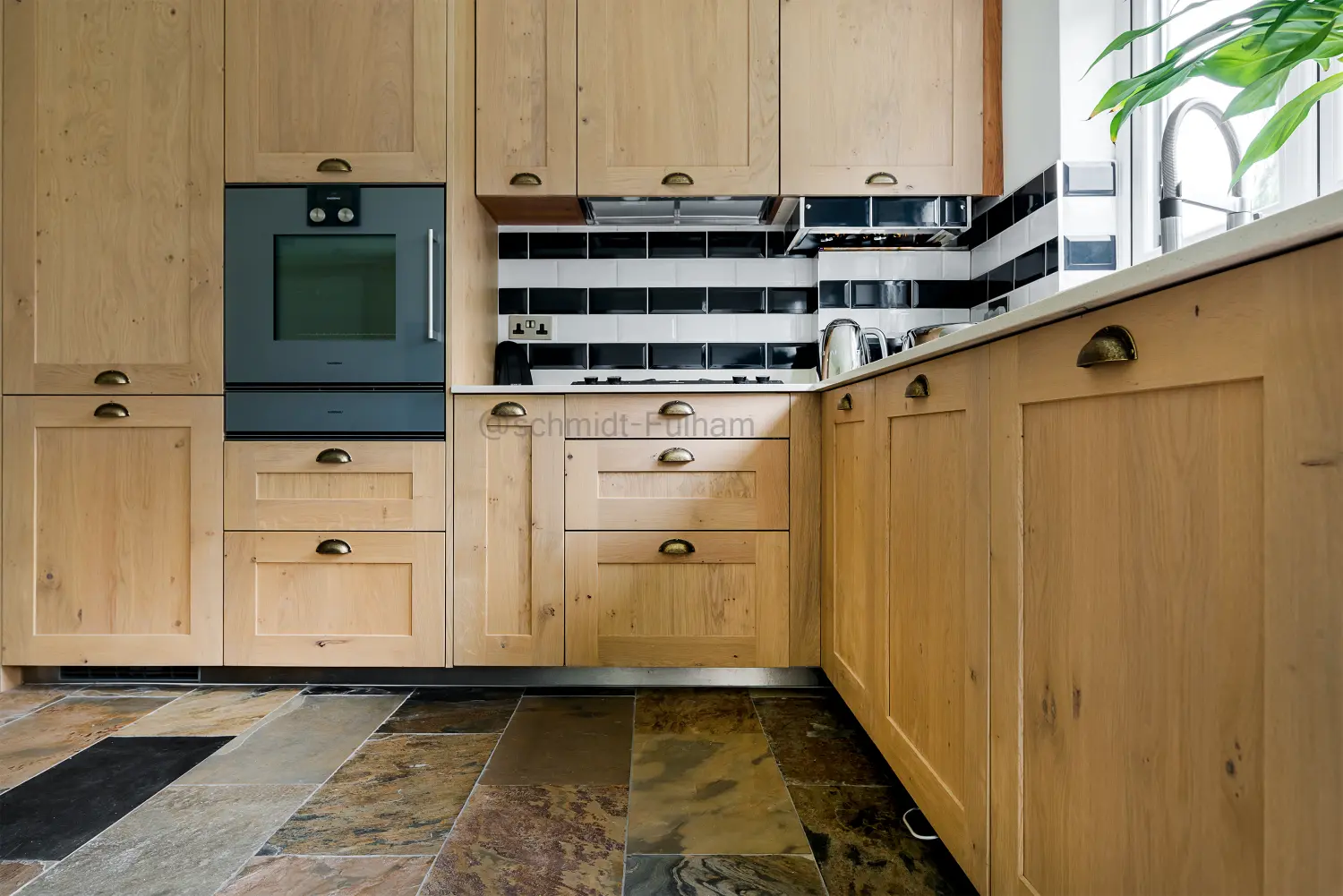
A wooden island can introduce warmth and texture while leaving the surrounding cabinetry in a different finish. Full wooden kitchens create a more continuous look, with the wood grain becoming a defining feature of the room. Both approaches can work beautifully, but they suit different spaces and preferences.
The decision depends on how much visual emphasis you want to give the wood, how it relates to your flooring and furniture, and whether the layout comfortably accommodates an island.
At Schmidt Fulham, we design made-to-measure kitchens around the way you live. Comparing these options as part of the complete room helps you choose a scheme that feels balanced and remains practical every day.
What Do You Want the Wood to Bring to the Room?
Before deciding how much wood to include, identify what attracts you to it.
You might want to soften a predominantly white kitchen, introduce texture into a modern extension or create a connection with furniture in the adjoining dining room. Alternatively, the grain and colour may be the main features you want the kitchen to celebrate.
A wooden island gives the material a concentrated role. It can become a focal point within an otherwise understated scheme.
Full wooden kitchens place greater emphasis on the cabinetry as a whole. The effect can be calm and consistent, particularly when the door design and surrounding finishes are kept simple.
Neither choice requires a rustic style. The cabinet profiles, worktops and detailing will all influence the overall appearance.
When a Wooden Island Works Well
A wooden island can suit homeowners who enjoy natural-looking texture but want a lighter or more varied arrangement elsewhere.
Paired with plain-coloured perimeter cabinets, it creates a clear distinction between the central furniture and the room’s edges. This can be especially effective in an open-plan space, where the island sits between cooking and living areas.
The wood finish can also relate to a dining table, shelving or other furniture without needing to match it exactly.
Consider which sides of the island will be visible. From the living area, the back panel may be more prominent than the kitchen-facing drawers. Its finish, proportions and seating arrangement therefore deserve just as much attention.
At Schmidt Fulham, we look at the kitchen from different viewpoints so the design works beyond the main cooking area.
An Island Must Earn Its Place
An island should provide useful preparation space, storage or seating within a comfortable layout.
Before choosing its finish, establish whether there is sufficient room for movement, open drawers and appliance doors. Think about how the kitchen will function when someone is cooking while another person sits at the island.
A compact island that obstructs everyday tasks may offer less benefit than a well-designed peninsula or additional wall cabinetry.
If your room cannot comfortably accommodate an island, you can still introduce a selective wood finish through base units, tall cupboards or another defined area. The appeal of mixed materials does not depend on having furniture in the centre of the room.
When Full Wooden Kitchens Make Sense
Full wooden kitchens can create a strong sense of continuity. Repeating a finish across the cabinetry reduces the number of competing colours and gives the room a clear visual identity.
This approach may appeal if you particularly enjoy the grain and want it to remain prominent throughout the space. It can also work well where the surrounding architecture and decoration are relatively restrained.
However, consider how much cabinetry will be visible. A kitchen with extensive tall storage presents a much larger area of wood than one with mainly base units.
Look at the full elevation rather than a single door sample. The scale of the grain, its direction and the arrangement of the cabinets will influence whether the result feels gentle, bold or visually busy.
Compare the Material, Not Just the Colour
The phrase “wooden kitchens” can cover different constructions and finishes. Solid wood, real wood veneer and wood-effect surfaces have different characteristics, so ask what is included in the proposed specification.
Discuss appearance, expected variation and care requirements. A small sample may not reveal how a finish looks when repeated across several doors.
For an island, pay particular attention to the panels beside stools and areas likely to receive frequent contact. For a full kitchen, consider the finish around handles, preparation areas and appliances.
Understanding these details allows you to choose around your household’s routines, rather than relying solely on a photograph.
Consider Flooring and Furniture Together
A wooden island or full wooden kitchen will sit alongside materials already present in the room. Flooring is often the largest of these, followed by dining furniture and any fitted storage.
Several wood tones can work together, but the relationship should feel deliberate. Compare their undertones and grain patterns rather than trying to find an approximate match.
For example, a clearly contrasting floor and cabinet finish may feel more resolved than two almost-identical shades. A quieter floor can also give more expressive cabinetry room to stand out.
Bring flooring samples and photographs of furniture you intend to keep to your design consultation. They help establish how the proposed kitchen will belong within your home.
Let the Worktop Balance the Cabinetry
The worktop plays a different visual role in each approach.
On a wooden island, it helps define a central feature. You might choose a surface that contrasts with the wood or one that connects the island to the perimeter cabinetry.
In full wooden kitchens, the worktop can provide a visual break between the upper and lower parts of the room. A restrained surface may suit pronounced grain, while a more expressive worktop needs careful consideration alongside the cabinetry.
Assess the materials together and include the splashback in the comparison. Choosing each element independently can lead to an unnecessarily busy combination.
Use Light to Assess the Whole Scheme
Daylight and artificial lighting can change how a wood finish appears. A sample viewed close to a window may look different at the back of the room or beneath evening lighting.
Consider where the wood will sit in relation to glazing and darker corners. This matters particularly when comparing a single island with larger areas of cabinetry.
At Schmidt Fulham, our design process includes 3D renders and a VR experience to help you explore the proposed layout and overall composition. Physical samples remain valuable for assessing colour and texture, so the two should be considered together.
Explore Wooden Kitchens With Schmidt Fulham
The right choice depends on the role you want wood to play in your home. A wooden island can create a distinct focal point, while a full wooden kitchen offers continuity across the furniture. Both need thoughtful proportions, practical storage and complementary materials.
Led by owner and director Elfat Darwich, Schmidt Fulham focuses on understanding how clients use their homes and the everyday details that make a kitchen enjoyable. Your dedicated designer can help compare finishes and layouts as part of a personalised, made-to-measure plan. Call 0203 883 9613 to arrange a free design consultation and explore the possibilities for your kitchen.